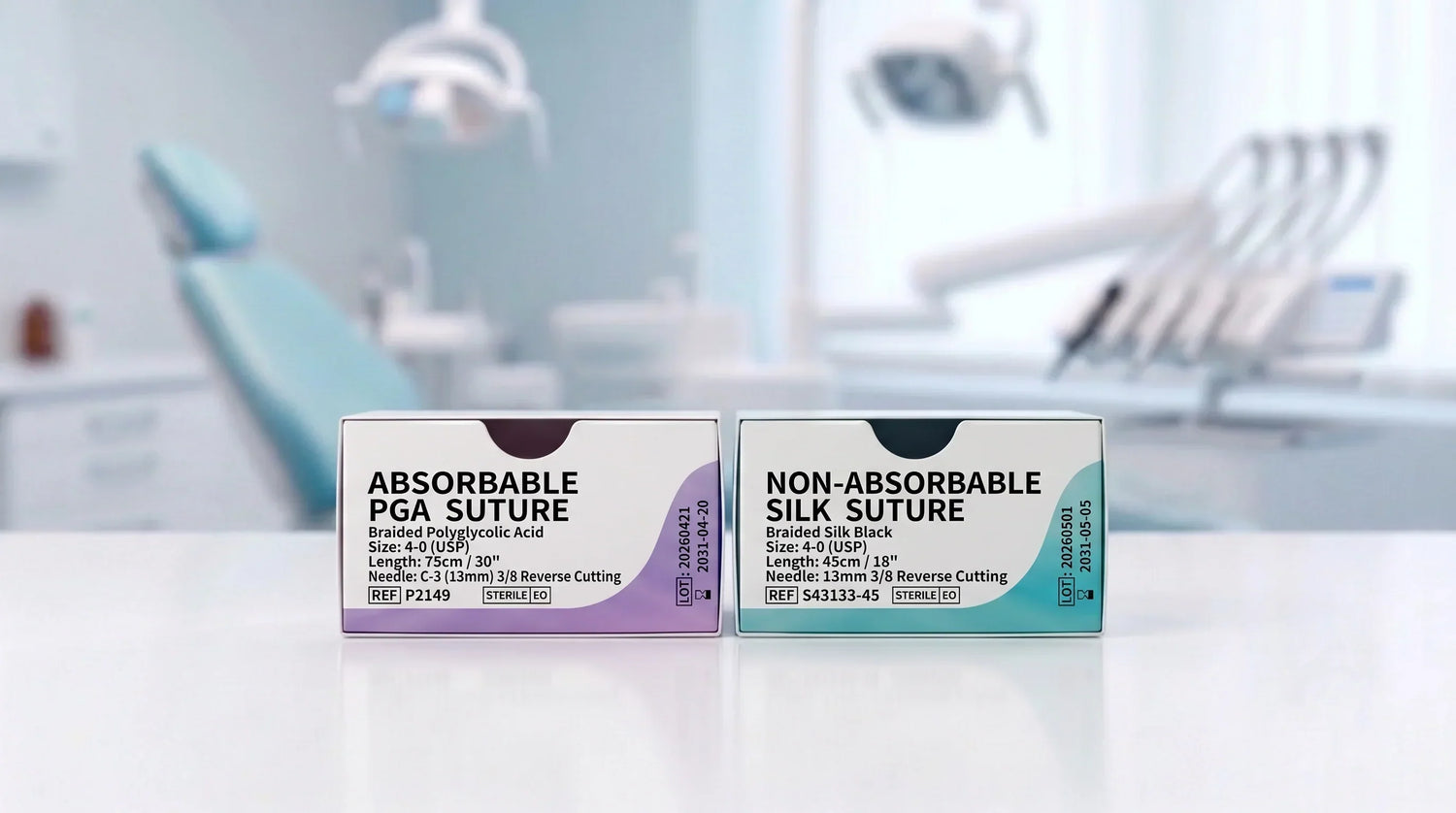
Selecting the right material for wound closure directly impacts healing outcomes and patient comfort. Absorbable sutures provide convenience by breaking down naturally, while non-absorbable options offer superior strength for high-tension sites. Oral surgeons often balance these factors to ensure optimal tissue approximation, minimizing postoperative complications while maintaining a seamless clinical workflow throughout the recovery period.
Defining Absorbable Sutures and Their Natural Degradation Processes
Absorbable sutures remain the primary choice for deep tissue closure and oral procedures where follow-up visits for removal are difficult or unnecessary. These materials disappear as the body breaks them down through hydrolysis or enzymatic degradation.
Mechanics of Suture Degradation
Synthetic polymers typically degrade through hydrolysis, where water molecules break the chemical bonds of the material. In contrast, natural materials, like catgut, rely on enzymatic digestion by the body. These processes occur at predictable yet varying rates depending on the exact material composition.
Clinical Impact of Material Breakdown
Patients often prefer these sutures because they require no secondary office visit. However, clinicians must match the degradation rate to the healing speed of the specific tissue. If a suture breaks down too fast, the wound might dehisce. If it stays too long, it may cause unnecessary localized inflammation.
Understanding Non-Absorbable Sutures and Their Role in Oral Surgery
Non-absorbable sutures provide mechanical stability that lasts until the surgeon manually removes them. These materials maintain their tensile strength without degradation, making them essential for high-stress areas or specific periodontal procedures.
Characteristics of Non-Absorbable Materials
Common materials include silk, nylon, and polypropylene. These fibers resist the body's digestive processes. They provide a predictable holding period, which is vital when a surgeon needs to ensure the wound remains closed for an extended time to facilitate primary intention healing.
Situations Requiring Non-Absorbable Options
- Skin or mucosa on mobile sites: Areas with significant movement require the durability of non-absorbable materials.
- Periodontal flap surgery: Surgeons often choose these when they need to monitor the site closely after a few days.
- Long-term graft stabilization: Maintaining tension on a graft site is often more successful with non-degrading materials.
Comparing Key Clinical Differences Regarding Absorption Time and Tissue Reaction
Comparing absorbable vs non-absorbable sutures reveals distinct trade-offs in clinical performance. Success hinges on evaluating suture absorption time alongside the inflammatory profile of the chosen material.
Analyzing Tensile Strength and Material Longevity
| Feature | Absorbable Sutures | Non-Absorbable Sutures |
|---|---|---|
| Tensile Strength | Decreases over time | Remains constant |
| Removal Required | No | Yes |
| Typical Use | Submucosal or deep layers | Superficial or high-tension areas |
| Tissue Response | Can be higher due to degradation | Generally inert |
Managing Tissue Reaction Profiles
Materials that absorb tend to provoke a mild inflammatory response as they break down. This is part of the normal healing pathway. Non-absorbable materials are typically inert and cause minimal reaction. If a patient has a history of sensitivity, clinicians often select inert, monofilament non-absorbable options to avoid discomfort or premature rejection.
Strategic Decision-Making for Absorbable Versus Non Absorbable Sutures in Oral Surgery
Selecting the correct suture material for non-absorbable sutures in oral surgery or absorbable alternatives requires a thorough assessment of the anatomical site and patient factors.
Evaluating Anatomical Demands
Sites with high muscle activity or tension benefit from the consistency of non-absorbable materials. Conversely, routine extractions or simple closures in the vestibule often favor absorbable materials.
Factors Influencing Material Choice
Patient Compliance: Use absorbable materials if the patient cannot return for suture removal.
Wound Tension: Choose non-absorbable materials for large flaps that might pull apart.
Visibility and Aesthetics: Monofilament materials are often less visible and collect less plaque than braided options.
WEGO Suture Solutions: Predictable Absorption for Every Clinical Scenario

To support strategic decision-making, clinics require suture materials that deliver completely predictable absorption profiles. WEGO provides a comprehensive portfolio of reliable, high-performance absorbable sutures designed to match the exact degradation and tissue-support needs of various surgical sites:
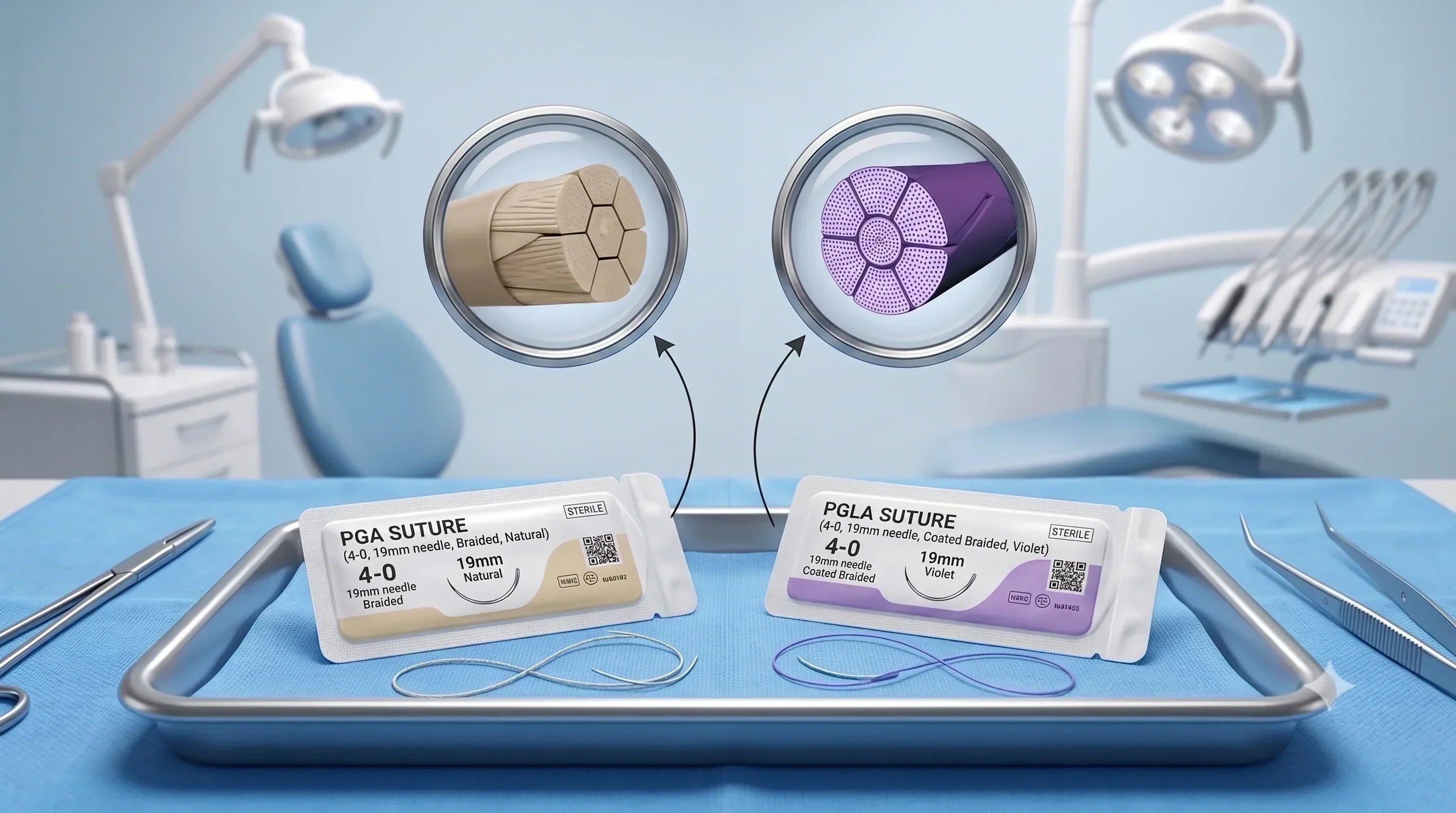
- WEGO-PGLA & WEGO-PGA: These standard braided multifilament options retain 75% of their knot tensile strength at 14 days post-implantation. They are the versatile workhorses for general soft tissue approximation, completing mass absorption via hydrolysis within 56–70 days (PGLA) or 60–90 days (PGA).
-
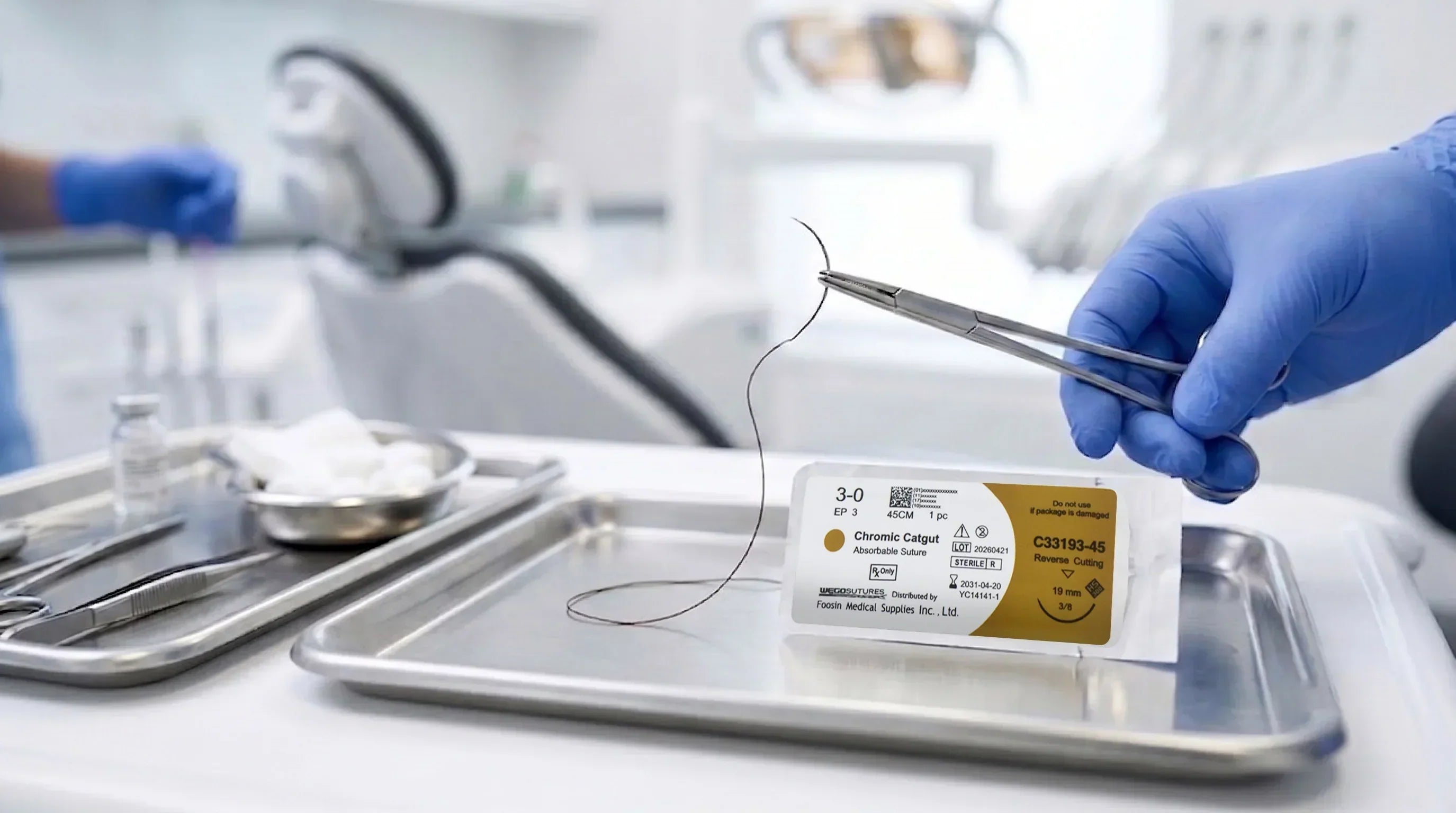
WEGO Chromic Gut: A natural absorbable option treated with chromic salt to slow enzymatic digestion, extending tensile support compared to plain gut. It remains a practical choice where a natural-material suture is preferred for mucosal or soft tissue closure, with absorption occurring gradually as the body's own enzymes break down the material.

Beyond its absorbable range, WEGO also offers non-absorbable suture options, such as Wego-Polypropylene and Wego-Silk, for cases requiring extended mechanical support, such as high-tension flap closures or sites where the surgeon plans to remove sutures manually after healing—giving clinics a single supplier to cover both ends of the absorption spectrum.
Practical Implementation Factors for Your Dental Practice
Efficiency and patient outcomes serve as the pillars of a successful practice. Integrating these materials effectively requires a balanced approach to inventory and patient education.
Inventory Management for Efficiency
Keep a concise selection of both material types available to address various surgical needs. Training staff on the specific handling characteristics of different materials leads to smoother procedures.
Communication Strategies
Patients value knowing what to expect during their recovery. Briefly explaining why you chose a specific suture—such as mentioning that a particular material will dissolve on its own—often increases patient comfort and trust.
Final Thoughts and Next Steps
Optimal surgical success stems from choosing the right tool for every unique tissue environment. Balancing the convenience of absorbable materials with the structural reliability of non-absorbable options leads to better healing. Assess your clinical needs and patient requirements to refine your selection process. Whether your clinic requires rapid-absorbing solutions for delicate mucosal flaps or standard predictable absorption for deeper closures, WEGO offers a comprehensive range of surgical sutures engineered to meet your exact specifications. Contact our product specialist today to explore our full portfolio of absorbable materials, request samples, and discuss tailored bulk-pricing options designed to elevate your practice's efficiency and clinical outcomes.
FAQs about Oral Surgery Suture Selection
Q1: What determines the ideal time to remove non-absorbable sutures?
Removal typically occurs between five to ten days after surgery, depending on the blood supply to the area and the specific location of the wound.
Q2: Are there specific sites where absorbable sutures should be avoided?
Absorbable materials are often avoided in areas where the surgeon requires absolute control over wound tension for several weeks or in locations where early suture breakdown could risk flap failure.
Q3: Do braided sutures hold more bacteria than monofilament sutures?
Braided sutures possess a textured surface that can harbor microorganisms, whereas monofilament materials provide a smooth surface that generally discourages bacterial adhesion.
Q4: Can a patient develop an allergic reaction to suture materials?
Reactions occur rarely, but patients with known sensitivities to specific polymers or natural components may experience localized redness or swelling that requires switching to an inert alternative.
Q5: How do rapid-absorbing sutures differ in clinical application compared to standard absorbables?
Rapid-absorbing suture materials are chemically or structurally engineered to lose tensile strength faster than standard absorbables, often dropping well below their original strength within the first one to two weeks. They are typically reserved for superficial closures or short-duration wound support needs, where only brief tissue approximation is required, allowing the material to resolve quickly and reducing the risk of prolonged foreign-body presence.