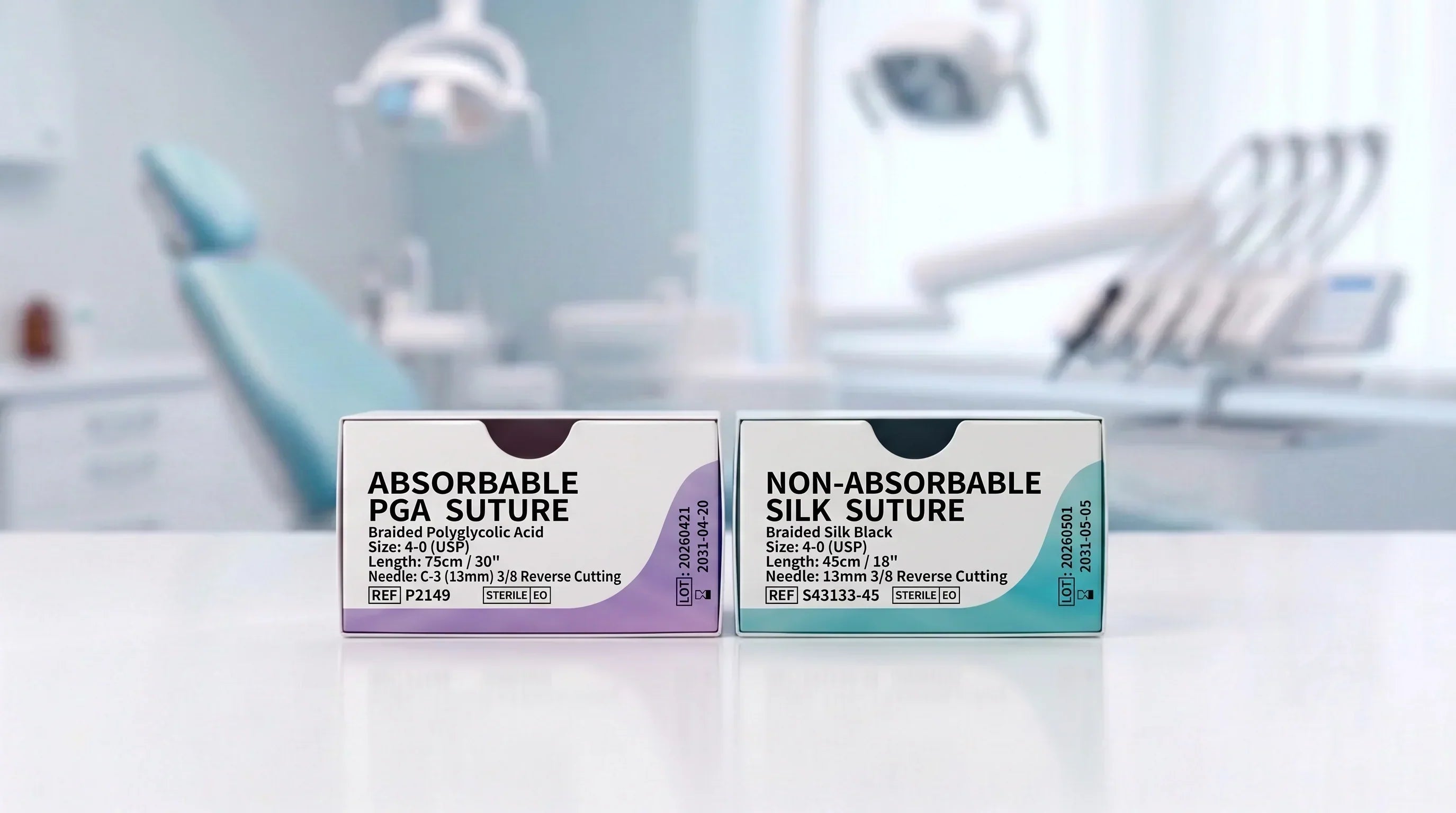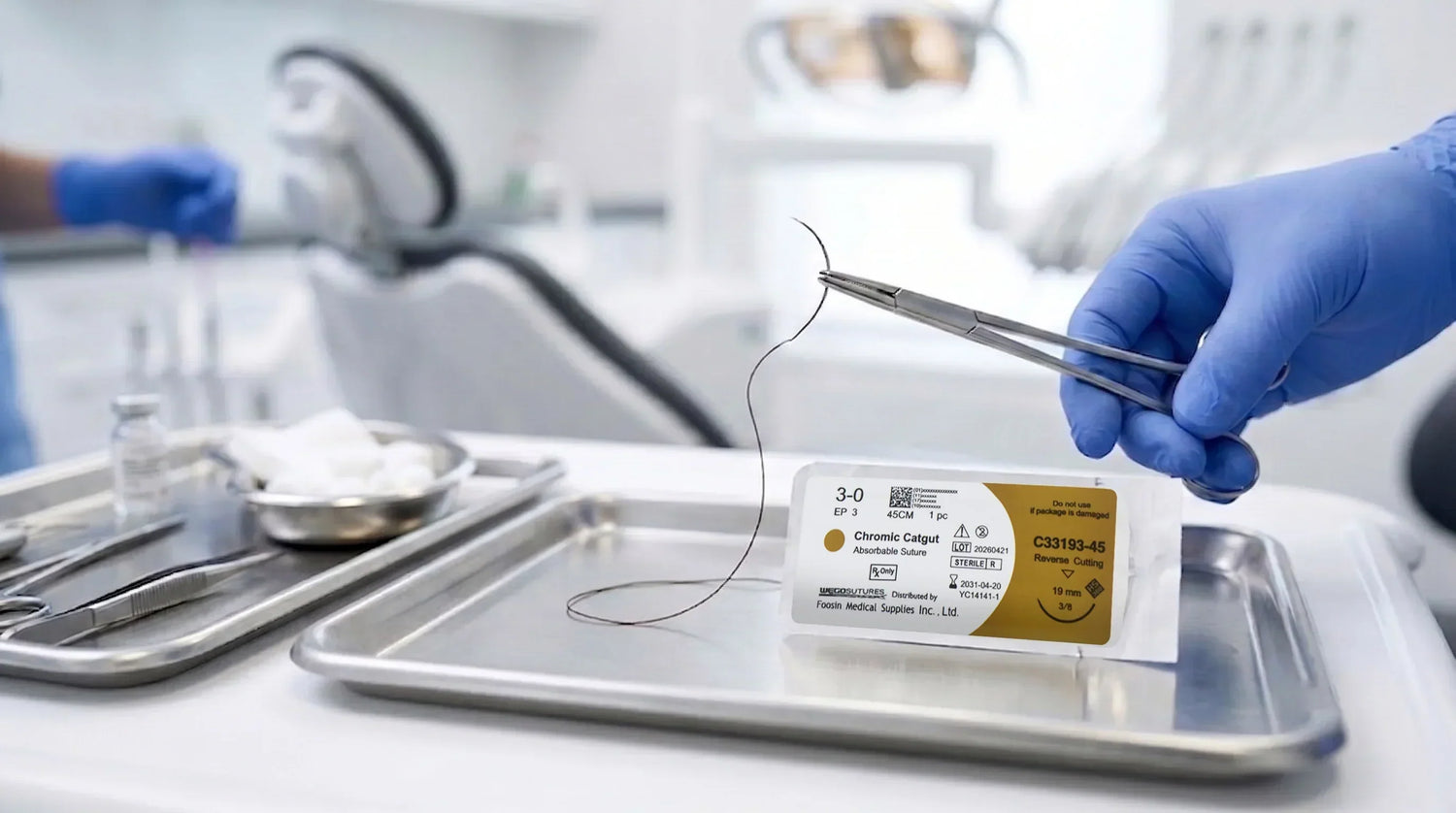
4-0 chromic gut sutures provide an ideal balance of tensile strength and predictable absorption for oral surgery procedures. Surgeons rely on these treated natural threads to secure soft tissues without requiring a second appointment for removal. The chromic salt treatment delays degradation. This specific gauge offers the precise thickness needed for delicate mucosal closures while minimizing tissue trauma and inflammation.
What Is 4-0 Chromic Gut Suture and How Treatment Processes Work
The transition from the basic definition to the manufacturing process reveals why this material performs so well. A 4-0 chromic suture is a sterile surgical thread made from purified connective tissue derived from sheep or beef intestines. Manufacturers bathe these collagen strands in a chromic salt solution to delay degradation in the body. The "4-0" designation refers to the diameter of the thread based on pharmacopeia standards. This specific size is thin enough to prevent large puncture wounds. The material remains thick enough to hold tissues securely.
Natural Collagen Origins
Production starts with the purified serosal layer of sheep or beef intestine. Manufacturers clean this raw tissue to strip away non-collagenous material, since leftover impurities are the main driver of foreign-body reactions once the thread sits in oral tissue. This purification step also determines how evenly the strand holds tension along its length — a batch with residual debris is more prone to weakening or snapping mid-knot, which is why raw-material quality control is the first checkpoint in producing a reliable 4-0 thread.
Chemical Salt Treatments
Purified collagen on its own — plain gut — dissolves too quickly for most surgical timelines, so manufacturers carry the strand into a chromic salt bath as the next step. This cross-links the collagen fibers, making them more resistant to the body's own enzymatic breakdown and extending the functional strength window compared to plain gut. The treatment also darkens the thread to a visible brown, giving surgeons a suture line they can track against pink oral tissue without eye strain during longer procedures.
Absorption Timeline and Tensile Strength Retention of Chromic Gut
The progression from chemical treatment naturally leads to an evaluation of how these threads break down inside the mouth. The chromic gut suture absorption time typically spans 90 to 114 days for complete mass assimilation. Surgeons can expect the material to hold functional tissue approximation for 14 to 21 days before losing significant structural integrity — a pattern consistent with published chromic catgut degradation data, where chromium cross-linking measurably slows enzymatic attack compared to plain gut. Dentists track the degradation phases to help clinicians schedule patient follow-ups effectively. The following table outlines the expected milestones during the healing period.
| Healing Phase | Expected Timeline | Structural Condition |
|---|---|---|
| Initial Support | Days 1 to 7 | Maximum tension hold |
| Functional Loss | Days 14 to 21 | Thread begins to fray |
| Surface Breakdown | Days 30 to 60 | Visible knot dissolution |
| Complete Absorption | Days 90 to 114 | Total mass disappearance |
Individual patient metabolism can slightly alter these exact timeframes. Local inflammation often speeds up the breakdown process.
Functional Strength Duration
Soft tissues in the mouth generally heal rapidly compared to dermal layers. The two to three weeks of reliable support provided by this thread perfectly matches the gingival healing cycle. Dentists rely on this predictable tension loss to ensure wounds do not pull apart during normal speaking or eating. The thread remains robust during the most critical early days of wound closure. The initial 48 hours require maximum holding power to stop bleeding and encourage clot formation. The strength curve drops gradually rather than failing suddenly. This smooth transition allows the healing tissue to take over the mechanical load organically.
Complete Mass Dissolution
Full mass absorption takes several months, as macrophages continue clearing residual collagen fragments long after the visible knot has disappeared. This late-stage breakdown stays tightly localized to the insertion track with minimal systemic involvement, so patients rarely notice or feel it. What matters clinically is the payoff: this highly predictable enzymatic breakdown process means fewer post-operative complications and virtually no unscheduled visits for suture removal, which is exactly why chromic gut remains a staple in routine dental surgery.
Clinical Applications of 4-0 Chromic Gut in Oral Surgery
Reviewing the precise absorption timeline highlights exactly where this specific gauge excels in modern dentistry. The primary 4-0 chromic gut suture uses include third molar extraction site closures and delicate soft tissue grafting. Dental professionals increasingly rely on premium materials like WEGO chromic gut sutures when they need dependable support without the hassle of a follow-up suture removal visit. The oral cavity presents unique challenges with constant moisture and high bacterial counts. The chromic coating resists the rapid breakdown typically caused by saliva.

Routine Tooth Extractions
Wisdom tooth removals often leave large sockets that require secure closure to prevent food impaction. The 4-0 thickness provides adequate strength to pull the gingival flaps together over the socket. Clinicians tie simple interrupted knots to keep the tissue edges approximated. The natural dissolution saves the patient from a potentially painful removal procedure a week later. The smooth surface resists plaque accumulation during the vulnerable healing phase. Food particles glide over the dark brown thread easily. The knot lies flat against the gum tissue to prevent tongue irritation. The patient experiences a more comfortable recovery period overall.
Soft Tissue Grafting
Periodontal plastic surgery demands fine materials that do not tear fragile grafts. The smooth surface of this processed gut pulls through delicate gum tissue easily. Surgeons use it to stabilize connective tissue grafts against the tooth root. The delayed absorption ensures the graft vascularizes properly before the mechanical support fades away. A stable blood supply is paramount for graft survival. The 4-0 diameter creates very small puncture holes in the donor tissue. Tiny needle tracks heal quickly with minimal scarring. The final aesthetic outcome benefits greatly from this careful material selection.
Implant Placement Procedures
Dental implants require pristine surgical fields and primary closure for optimal integration. Dentists frequently utilize a suture such as WEGO Chromic Catgut — available in 3/0, 4/0, and 5/0 gauges, with a reverse cutting needle option — to close incisions over freshly placed implant fixtures. The reliable tension holds the protective gum layer securely over the titanium screw. This barrier prevents oral bacteria from entering the bone integration zone. The thread maintains primary closure even when the surgical site experiences moderate swelling. The slight elasticity of the wet gut accommodates minor tissue expansion. Dentists appreciate the reliable performance during the critical early osseointegration phase. The smooth pull-through prevents micro-tears in the thin mucosal flaps.

Handling Knotting and Storage Best Practices for Chromic Gut Sutures
Proper clinical application requires an equal focus on proper manipulation techniques to prevent material failure. Proper handling of chromic gut sutures begins with opening the packet only immediately before the procedure. Clinicians keep the threads moist to maintain their natural flexibility and tie square knots with extra throws for maximum security. The physical properties of natural collagen demand specific environmental controls. Dry collagen becomes brittle and snaps under tension.
Optimal Moisture Control
The manufacturing process seals the threads inside a foil packet filled with conditioning fluid. Dental assistants leave the thread in this fluid until the exact moment the surgeon needs it. Exposure to room air dries out the material within minutes. A dried thread loses its pliability and becomes extremely difficult to tie securely. Staff members coordinate timing to open the foil exactly when the needle holder is ready. The conditioning fluid evaporates rapidly under bright operatory lights. A few drops of sterile saline can rescue a slightly dry thread if necessary. Optimal moisture ensures the knot slides down the strand smoothly.
Knot Security Techniques
Natural gut materials tend to slip more easily than braided synthetic alternatives. Surgeons compensate for this by adding additional square knots to their standard tying sequence. A surgeon's knot followed by two or three alternating throws provides a reliable anchor. Clinicians leave the cut tails slightly longer than usual to accommodate minor knot swelling. The moisture in the mouth causes the ends to puff up slightly over the first day. This expansion actually helps lock the square knot in place. Proper instrument handling prevents crushing the delicate strand before tying. A smooth steady pull tightens the loop without damaging the collagen structure.
Clinical Storage Protocols
The integrity of the packaging fluid depends on stable environmental temperatures. Dental offices store these boxes in cool cabinets away from autoclaves or direct sunlight. Heat degrades both the conditioning fluid and the collagen structure. Proper inventory management ensures the oldest boxes are used first to maintain peak material performance. The foil packets protect against light exposure but cannot insulate against extreme ambient temperatures. Dental assistants conduct regular audits of the supply closet. Expired materials lose their tensile strength rapidly. Routine stock rotation guarantees the surgical team consistently has reliable products.
Important Considerations When Using Chromic Gut Sutures in Modern Practice
Excellent handling techniques naturally bring up specific patient factors that influence overall suture selection. Practitioners avoid placing these sutures in areas with active or severe infections. High levels of proteolytic enzymes in infected tissues will accelerate the breakdown of the collagen fibers, leading to premature wound opening, a well-documented effect, since proteolytic enzyme activity is the primary mechanism by which natural gut sutures lose tensile strength faster in inflamed or infected sites. A thorough assessment of the surgical site determines if a natural absorbable material is the correct choice.
Patient Biological Factors
Patients with chronic inflammatory conditions often process absorbable materials differently. An aggressive immune response can digest the thread faster than anticipated. Nutritional deficiencies might delay natural soft tissue healing. The surgeon balances these biological variables when selecting the thread gauge and material type. Age often plays a role in the speed of tissue regeneration. Older patients tend to dissolve natural gut slightly slower due to reduced metabolic rates. Pediatric patients process the material faster. The treatment plan adapts to these expected biological variations.
Inflamed Surgical Sites
Purulent exudate contains enzymes designed to destroy organic matter. These enzymes cannot distinguish between bacterial debris and a natural collagen stitch. The placement of gut threads in a heavily infected socket often results in the knot dissolving within a few days. Synthetic non-absorbable materials serve better in these compromised environments. Polypropylene or nylon threads ignore enzymatic attacks completely. The clinician swaps to these alternatives when pus or severe swelling is present. The primary goal remains keeping the tissue edges together despite the hostile local conditions. Careful preoperative assessment prevents premature suture failure.
Postoperative Patient Instructions
Clear communication helps patients protect their surgical sites. Dentists advise patients to eat soft foods and avoid aggressive chewing near the fresh stitches. Warm saltwater rinses help keep the area clean without mechanical disruption. Patients who understand the fragile nature of the material tend to experience fewer complications. The dental team provides written instructions detailing proper oral hygiene. Gentle saltwater rinses start twenty-four hours after the surgery. The warm water promotes local blood flow and soothing comfort. Compliance with these simple rules drastically improves the final surgical result.
Equip Your Practice With Reliable Sutures Today
Consistent surgical outcomes rely heavily on selecting high-quality closure materials. Dental professionals achieve optimal tissue healing by utilizing appropriate thread gauges for specific mucosal repairs. Correct storage and precise knotting techniques ensure the material performs as expected. Clinicians can confidently perform complex oral surgeries when they have the right supplies. Visit the WEGO Chromic Catgut product page on our official website to stock up in 3/0, 4/0, or 5/0 gauges with your choice of needle length, and ask about volume pricing when equipping your practice for the months ahead.
FAQs about Chromic Gut Suture Handling
Q1: What temperature is best for storing packaged gut sutures in a dental clinic?
Room temperature between 15 and 30 degrees Celsius is the ideal storage range. Extreme heat damages the collagen structure and degrades the packaging fluid. Clinicians keep boxes away from direct sunlight or sterilization equipment.
Q2: Can patients brush their teeth normally around a dissolving surgical site?
Extra caution is necessary during the first week of healing. Patients use a soft-bristled brush and gently sweep away from the gum line to avoid dislodging the knot. Vigorous brushing will accelerate premature breakdown of the thread.
Q3: How does smoking affect the breakdown rate of mucosal stitches?
Tobacco smoke slows down the healing process and increases the risk of early thread failure. The chemicals reduce blood flow to the surgical site. This poor circulation alters the natural enzymatic digestion of the collagen fibers.
Q4: Does the packaging fluid contain alcohol or other preservatives?
A conditioning fluid consisting of isopropanol, water, and triethanolamine surrounds the thread inside the foil packet. This solution prevents the natural gut from drying out and becoming brittle. Surgeons rarely need to rinse the thread before use.
Q5: Why do some surgeons prefer a reverse cutting needle for this specific thread?
A reverse cutting profile provides a flat surface on the inner curve to prevent tissue tear-out. This design minimizes trauma to delicate gingival tissues during pass-through. The triangular shape easily penetrates tough oral mucosa with minimal resistance.