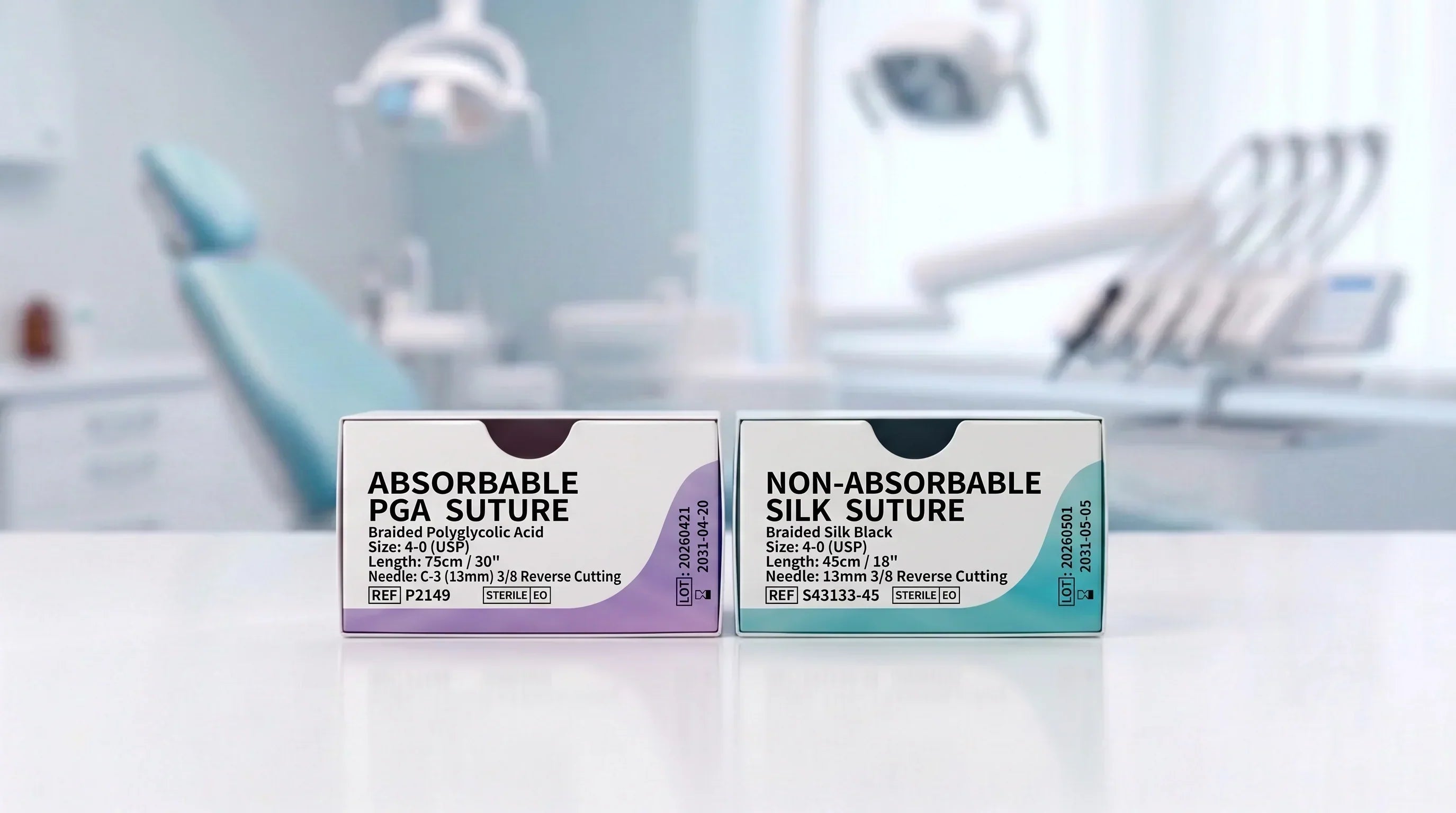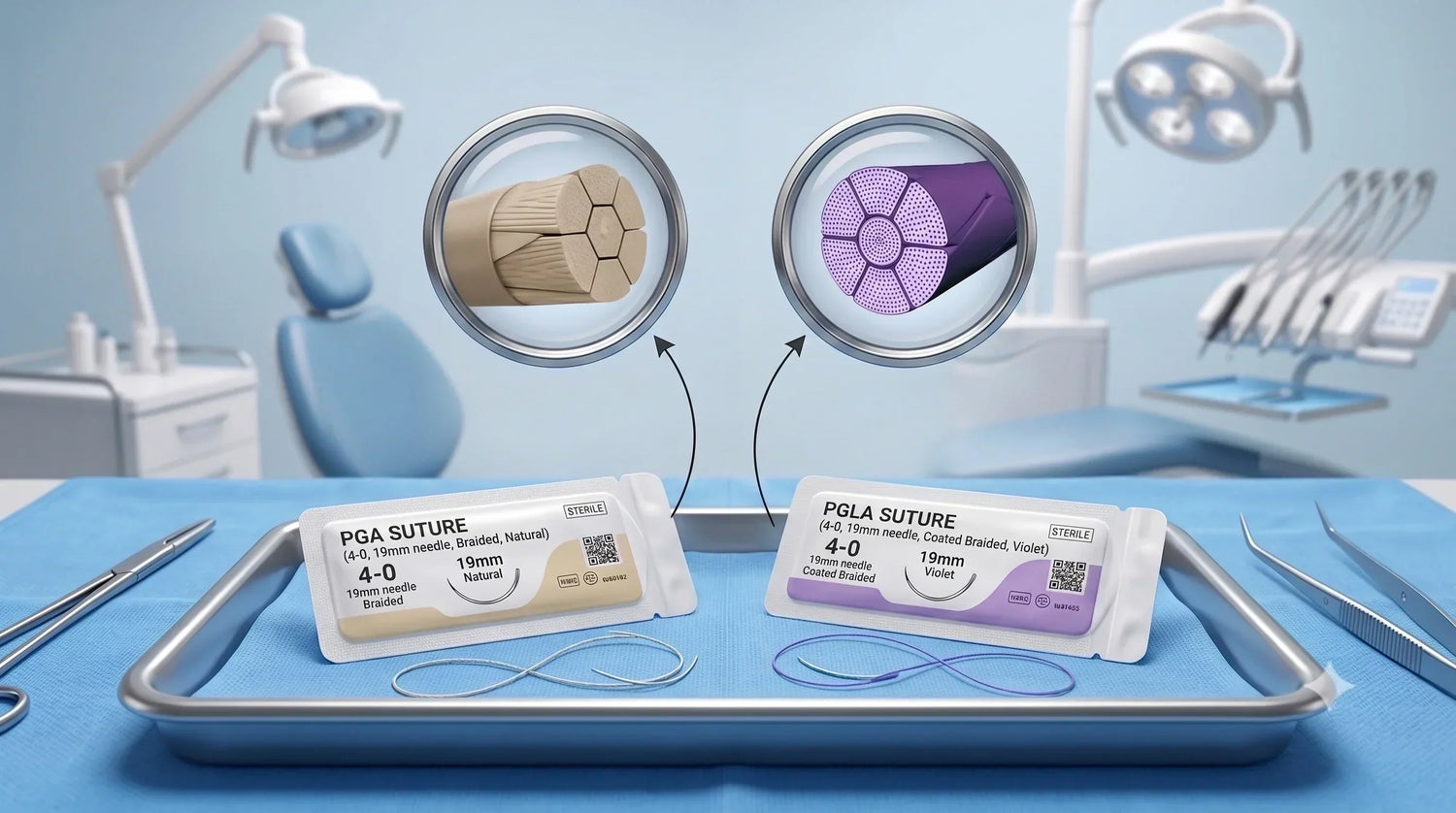
Choosing the right suture material directly influences how well a surgical site heals. When comparing PGA vs PGLA sutures, clinicians often look for the best balance between initial tensile strength and how quickly the body absorbs the material. Both options provide reliable performance in dental implant and periodontal procedures, yet they offer distinct characteristics that may sway your preference based on specific tissue requirements.
What Is PGA Suture and Its Key Properties
PGA sutures are synthetic, absorbable, multifilament threads made from polyglycolic acid. For the dental surgeon, their critical advantage lies in superior initial tensile strength.
Clinical Insight for Tissue Support
In the oral cavity, flaps are subjected to constant muscular pull, masticatory forces, and tongue movement. PGA reliably maintains tissue approximation during the essential first 7 to 10 days of the inflammatory and early proliferative phases of wound healing. Its braided structure offers a high coefficient of friction, yielding exceptional knot security even in high-tension areas, such as guided bone regeneration (GBR) closures or extensive flap advancements. Clinicians must be mindful that any braided material can act as a wick for plaque; therefore, combining PGA's robust hold with optimal patient plaque control yields the best regenerative outcomes.
What Is PGLA Suture and How Does the Coating Affect Performance
PGLA, or polyglactin 910, is an absorbable copolymer of glycolide and lactide. It is widely recognized as a Vicryl-type material, favored for its handling and predictability.
Clinical Insight on Tissue Friction and Healing
What sets PGLA apart in a clinical setting is its specialized coating (often incorporating calcium stearate). This coating directly addresses the "sawing" effect that uncoated braided sutures can have on fragile mucosal tissues. In delicate periodontal plastic surgeries, soft tissue grafting, or aesthetic zone closures, the coated PGLA glides through the gingiva, minimizing micro-tearing of the flap margins. This reduced tissue drag lowers localized trauma, subsequently reducing post-operative inflammation. The hydrolysis process of PGLA is highly predictable, maintaining essential tensile strength during critical healing while minimizing prolonged foreign body reactions.
Direct Comparison Between PGA and PGLA Sutures
Determining which material to use depends on the physical demands of the procedure. The following table outlines how these two materials perform in common metrics.
| Feature | PGA Suture | PGLA Suture |
|---|---|---|
| Material Structure | Braided Polyglycolic Acid | Braided Polyglactin 910 |
| Surface Texture | Slightly rougher | Smooth, coated |
| Initial Tensile Strength | Very high | High |
| Tissue Drag | Moderate | Low |
| Absorption Profile | Predictable | Consistent |
Evaluating Tensile Strength Retention
Both materials maintain strength long enough to support primary healing. PGA often retains its structure slightly longer than PGLA in specific environmental conditions. If your procedure involves high-tension areas where the flap must be held tightly for longer than 14 days, PGA might offer a slight performance edge.
Comparing Absorption Rates
Absorption rates are generally similar, yet subtle differences exist. PGLA usually completes its full mass loss slightly faster than pure PGA. This makes PGLA a practical choice for sites where you want to minimize the presence of foreign material as soon as the wound edges have sealed.
Optimizing Clinic Efficiency with WEGO PGA and PGLA Sutures
While selecting the optimal biomaterial is crucial for patient outcomes, managing overhead is a significant reality for modern dental practices. Braided multifilament options like PGA and PGLA are the foundational workhorses of the operatory. WEGO provides a highly reliable suite of these absorbable sutures tailored to meet rigorous surgical demands.
WEGO PGLA specifically aligns with the performance standards of traditional Vicryl-type sutures, offering the exact same smooth tissue passage, dependable knot security, and predictable absorption profile. The core advantage lies in cost-effectiveness; clinics can secure premium handling characteristics without the high brand premium, significantly reducing daily consumable costs while maintaining top-tier surgical care for patients.

Clinical Applications in Dental Implant and Periodontal Surgery
Dental surgeons often find that the choice between these materials shifts depending on the complexity of the site. Selecting the right thread contributes to patient comfort and better long-term clinical outcomes.
Periodontal Procedures
Periodontal surgeries often involve thin, delicate tissues. PGLA is frequently preferred here because the smooth coating prevents the suture from pulling through sensitive gingival margins. This results in less post-operative inflammation and a cleaner healing path.
Dental Implant Site Closure
For implant placements, especially in areas with sufficient tissue thickness, PGA is a robust choice. The high tensile strength helps keep the flap well-adapted over the implant site, which is vital for preventing exposure of the cover screw or healing abutment. For clinics looking for a high-quality Vicryl-type absorbable suture but wanting to avoid paying a steep brand premium, WEGO PGLA is an ideal choice that perfectly balances exceptional knot stability with cost-efficiency.

How to Choose Between PGA and PGLA for Your Specific Procedures
Deciding which suture to stock requires looking at your most common surgical tasks. Aligning the physical properties of the thread with the biological needs of the site simplifies your workflow.
When to Select PGA
Opt for PGA when you need maximum security and are working with robust, thick tissue. It performs best in areas where you do not need to worry about tissue drag as much as you need to worry about knot security.
When to Select PGLA
Choose PGLA for delicate procedures where tissue preservation is essential. If you are performing a gingival graft or working near a highly esthetic zone, the smooth passage of the coated thread will likely serve you better by reducing the risk of irritation.
Contact Our Team to Improve Your Surgical Outcomes
Reach out to our product specialist to discover how WEGO absorbable materials can enhance your surgical workflows and your bottom line. We invite you to claim a free trial to test out WEGO's suture products and experience their exceptional handling firsthand. Furthermore, if you require a large-volume supply for your practice or network, contact us to consult on custom quotes for bulk purchases. Our representatives can help you match the right suture characteristics to your specific implant and periodontal workflows. We look forward to supporting your practice with reliable, high-quality surgical supplies that ensure consistent performance for your patients.
FAQs about PGA and PGLA Sutures
Q1: Does the coating on PGLA sutures reduce the knot security compared to uncoated PGA?
PGLA sutures provide excellent knot security despite the coating, provided you apply the correct number of throws to account for the smooth texture of the material.
Q2: Is it better to use PGA or PGLA for patients prone to post-operative inflammation?
PGLA is generally preferred for sensitive or inflamed tissue because its coated surface passes through the gingiva with minimal friction, which helps limit additional trauma to the surgical site.
Q3: Can PGA sutures be used interchangeably with PGLA in all dental implant procedures?
PGA and PGLA are both viable options for most implant site closures, though PGLA is often more comfortable for the patient in thin-tissue areas due to its softer feel.
Q4: Are WEGO sutures reliable for complex dental surgeries?
Absolutely. While newer to some segments of the US market, WEGO sutures are manufactured to stringent international quality standards and are trusted globally by medical and dental professionals. They undergo rigorous testing for tensile strength, sterility, and biocompatibility, ensuring they perform predictably and securely in demanding oral environments.
Q5: Should I expect a difference in the absorption timeline between these two suture types?
Yes, minor differences exist. PGLA generally completes its absorption process slightly faster than PGA, making it highly suitable for areas where you want the foreign material to dissolve promptly once the primary tissue seal is established.